Terrazas y Piscinas Málaga Español
Terrazas y Piscinas Málaga

Outdoor paving for the garden, terrace and pool on the Costa del Sol

In shortTerrazas y Piscinas Málaga lays the outdoor surfaces of a home: paved terraces, patios and porches, pool surrounds, garden paths, barbecue and gazebo floors in crazy-paving stone, and outdoor steps. We work across the whole province of Málaga with concrete pavers, large-format slabs and natural stone, building a compacted base and a fall that sends rainwater away from the house. Owners living abroad can run the whole job by email with photo updates at each stage.

Send us a photo and the approximate m² – free, no-obligation quote

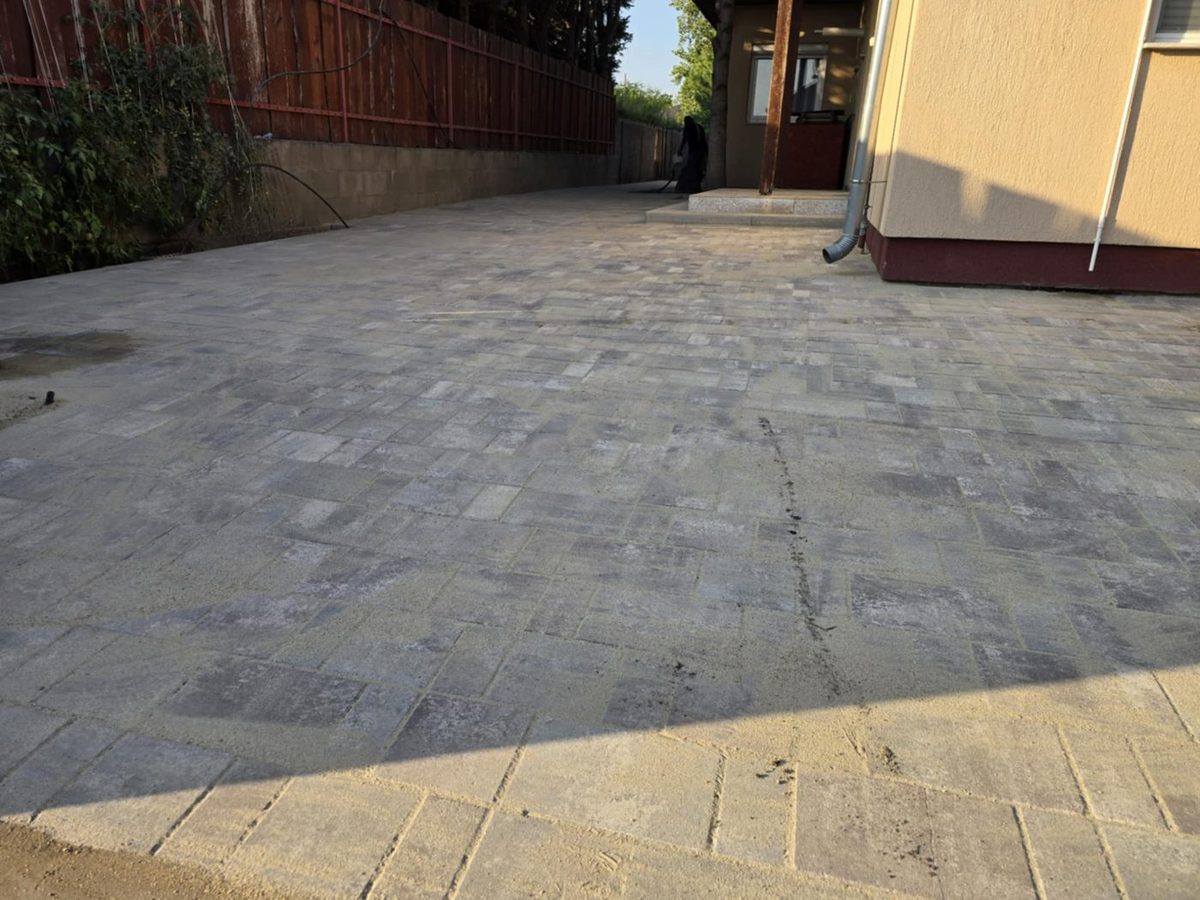
Large-format grey blended paved yard beside a house
Finished large-format blended paving beside a family house, with a timber fence

What does Terrazas y Piscinas Málaga actually do?

We pave the parts of a property where people spend their time outdoors. That means the terrace off the living room, the patio by the kitchen door, the deck of paving around a swimming pool, the path from the gate to the front door, the floor under a pergola or barbecue, and the steps that join one garden level to the next.

In practical terms, garden renovation with us usually starts with something that no longer works: a terrace that holds water after rain, a pool surround with rocking slabs, a lawn worn bare along the route everyone walks, or old crazy paving lifted by roots. We take up what has to go, rebuild the layers underneath and lay a new surface that suits the way the household lives.

The business is run by one registered sole trader, Bauman Raymond Attila, from an office in Marbella. The same autónomo operates six related websites, each covering one kind of paving job. This one deals only with the outdoor living areas of a home; driveways, sunken paving and restoration of existing surfaces have their own sites, linked below where they are relevant.

Which outdoor areas can we pave for you?

Every area of a garden has a different job to do, so each one is planned on its own terms rather than with a single standard specification. The list below shows the six types of work we carry out and links to a page explaining each in detail.

  • Paved terraces: level outdoor rooms next to the house, laid in concrete pavers or slabs with a fall away from the walls
  • Patios and porches: yards, courtyards and covered porches, including replacing a worn concrete or tiled patio
  • Pool surrounds: the paved area around the water, where grip, edges and drainage matter more than anywhere else in the garden
  • Garden paths: routes between gate, house, pool and garden, in pavers, slabs or stone, with firm edges
  • Barbecue and gazebo areas: crazy-paving stone or pavers under pergolas, outdoor kitchens and dining corners
  • Outdoor steps: risers and treads clad in block pavers or stone to link levels of a sloping plot

Many jobs combine two or three of these. A typical example is a new pool surround that continues as a path to the terrace, with a couple of steps where the ground drops. Planning them together lets the falls, levels and materials join up properly instead of meeting at awkward edges.

Why does a garden surface sink or hold water?

Most failures in outdoor paving come from what is underneath, not from the pavers themselves. When the sub-base is too thin, poorly compacted or washed out by water, the surface settles in patches; when the fall is missing or runs towards the house, rain sits on the terrace instead of draining away.

Garden areas are often treated as less demanding than a driveway, and that is where shortcuts happen. A terrace may only carry furniture and people, but it still needs a compacted granular layer, a bedding layer of even thickness and edges that stop the pavers from creeping outwards. Around a pool, splashed water and backwash add to the rain, so the base must cope with being wet more often than the rest of the garden.

Typical build-up under outdoor paving: ground, compacted sub-base, bedding layer, pavers and jointsPaverBedding layer (grit)Sub-base: granular / soil-cementCompacted groundEdge restraint (kerb)Sand-filled joints
Typical build-up under outdoor paving: ground, compacted sub-base, bedding layer, pavers and joints

Our guide to a patio without puddles explains how falls, channels and gullies are worked out before laying starts. If an existing surface has already dropped, the specialist pages on lifting and relaying sunken paving cover the repair rather than full replacement.

Which materials work best for terraces, paths and pool areas?

There is no single best material; the right choice depends on where the surface sits, how wet it gets and the look you want. For most outdoor living areas we lay concrete block pavers, large-format concrete slabs or natural stone, and we explain the trade-offs on site with samples.

MaterialWhere it suitsPoints to weigh up
Concrete block paversTerraces, patios, paths, stepsEasy to lift and relay; many colours and blends; joints need topping up
Large-format concrete slabsModern terraces, wide pathsCalm look with few joints; need a very even bed and careful handling
Crazy-paving natural stoneBarbecue corners, gazebos, rustic pathsEvery piece is cut to fit; slower to lay; each stone differs
Porcelain or other tilesSome terracesUsually bonded to a concrete slab, a different system from pavers

For pool surrounds, the surface finish matters as much as the material. Spain's Building Code classes floors by slip resistance and, within its scope, calls for the highest class around pools; our guide to pool surround materials covers that in detail. If you are torn between pavers and tiles, read pavers or porcelain before deciding, and for stone the guide to natural stone in the garden sets out what to expect.

We work with Mapei products where a bonded or sealed system is needed. We do not recommend a material from a catalogue alone: a sample placed on your terrace in its real light is the quickest way to rule options in or out.

How does a project run from the first photo to the finished terrace?

A job starts with photos and rough measurements, continues with a site visit and a written quote, and ends with a clean, finished surface. Owners who are not in Spain can follow each step from abroad, in English, and nothing is covered over without you having seen it first.

  1. You send photos of the area and the approximate m², with a note on what bothers you about the current surface.
  2. We reply with questions and, where it makes sense, arrange to see the property, check levels, access and what lies under the existing paving.
  3. You receive a written quote that lists the layers, materials, edges and the removal of rubble.
  4. Before work starts, we confirm with you or your administrator whether the town hall or the community of owners needs to be involved.
  5. We lift the old surface, build and compact the base, set edges and lay the new paving to the agreed falls.
  6. Joints are filled, the surface is compacted where the material allows it, and the area is cleaned and handed back.
  7. Throughout the job you receive photos of the hidden stages, so you can see what goes under the surface before it is covered.

The order of trades matters on garden jobs. Irrigation pipes, garden lighting cables and pool pipework should be in place before the base is built, because lifting new paving later to add a cable undoes part of the work. We ask about these early so that the other trades can be scheduled around the paving.

What should you check about permits and community rules?

In Andalusia, minor works that do not need a project are generally handled by a responsible declaration (declaración responsable) under Law 7/2021 (LISTA), article 138.1.a), but each town hall's ordinance decides which procedure applies to a particular job. For any given paving job in your town, the local council confirms the exact route, and we check it with you before work starts.

If your home is part of a community of owners, the Horizontal Property Law (Ley 49/1960) applies. Work on common elements, such as a shared pool surround or a communal garden path, needs a resolution of the owners' meeting under the majority rules of article 17; the community administrator can confirm the exact majority your job needs. A private terrace that belongs only to your unit may still be subject to the community's rules on appearance, so it is worth asking before choosing colours.

We are the contractor who carries out the works. We do not draw up architectural projects or geotechnical studies. Where a job needs those, your architect or engineer prepares them and we build to their specification. Rubble from lifting old paving is handled under the rules for construction and demolition waste, which we explain in the quote.

What affects the cost of paving a garden or pool area?

The cost depends mostly on the surface area, the state of the existing ground, access for machinery and materials, and the paving chosen. Prices are not published on this site; the network's price site sets them out openly, so you can compare like with like before asking for a quote.

  • Square metres: small, fiddly areas cost more per m² than large open ones
  • Access: a terrace reached only through the house or down garden steps means more handling by hand
  • What has to come up first: old concrete, tiles or crazy paving to break out and remove
  • Base condition: whether the existing sub-base can be reused or has to be rebuilt
  • Falls and drainage: channels, gullies or connections to an existing drain
  • Material and pattern: stone and cut-heavy patterns take longer than standard pavers
  • Edges, steps and details around the pool, planters and walls
The main factors that shape a paving quoteArea (m²)AccessCondition of the baseSlopeMaterialKerbsWaste removal
The main factors that shape a paving quote

For published rates per square metre, see block paving cost per m², or try the online paving calculator to get an approximate figure before you contact us. The article on what drives the budget for a paved terrace walks through the same factors with examples from garden work.

Where in Málaga province do we work?

We cover the whole province of Málaga from our base in Marbella. Most garden and pool jobs are on the coast, from Manilva and Casares through Estepona, Marbella, Mijas, Fuengirola, Benalmádena and Torremolinos to Málaga city, Rincón de la Victoria, Vélez-Málaga, Torrox and Nerja, and in the hill towns behind them such as Benahavís and Ojén.

Villas, townhouses in urbanizaciones and ground-floor apartments with private gardens each bring their own questions, from narrow access lanes to community rules on what can be changed. The area pages below the main menu give more detail on each town, including how we organise access and deliveries there.

How do the six websites in this network fit together?

All six sites belong to the same sole trader and share one team, one phone line and one way of working. They are split by topic so that each page can answer one kind of question properly instead of mixing everything together.

If your terrace is structurally sound but looks tired, restoring it may make more sense than replacing it; the page on patio and terrace restoration explains when that works. If it has sunk, start with the repair site. And if the job is really about where the car goes, the driveway site is the better place to begin.

What should you read before deciding?

A little background makes the conversation with any contractor quicker and helps you compare quotes on the same basis. These guides and articles answer the questions garden owners ask us most often, from choosing an edge to keeping joints free of weeds.

When you are ready, send us a photo and the approximate m² – free, no-obligation quote. A few pictures taken from different angles, plus one showing how the area is reached from the street, are usually enough for a first answer.

How we work

Fall towards the drainHouse wallChannel drainFall towards the drainWater must not run towards the house

Work and photographs

Crazy-paving stone floor under a gazebo with a brick barbecue
Crazy-paving natural stone path being laid beside a timber gazebo
Large-format grey blended paved yard beside a house

Projects · Gallery

Areas we cover

Patios and terraces in AlgarroboTerraces, garden paths and outdoor steps for houses in Algarrobo, quoted from your photos first.Terraces and patios in BenalmádenaPrivate terraces and communal pool areas in Arroyo de la Miel, Benalmádena Costa, Torrequebrada and more.Pool surrounds and patios in CasaresPool surrounds, terraces and paths in Casares Costa, Secadero and the village, managed for owners abroad.Terraces and gardens in EsteponaTerrace extensions, pool surrounds and garden paths for villas from Cancelada to Bahía Dorada.Patios and porches in FuengirolaCompact patios, porches and terraces in Los Boliches, Torreblanca, Carvajal and other Fuengirola areas.Terraces and pools in ManilvaTerraces, pool surrounds and garden paths in Sabinillas, Duquesa, La Chullera and Alcorrín, run remotely for owners abroad.Patios and pool areas in MarbellaTerraces, pool surrounds and stone BBQ areas from San Pedro to Cabopino, laid from our Marbella base.Patios and terraces in MijasTerraces, pool surrounds and outdoor steps in Mijas Pueblo, Mijas Costa, La Cala, Calahonda and Las Lagunas.Patios and terraces in Málaga cityBack patios, terraces and garden paths in every district of Málaga city, with the town hall procedure explained.Terraces and pools in NerjaNew terraces, pool surrounds and steps in Nerja and Maro, with honest advice on replacing versus renovating.Garden paths in Rincón de la VictoriaGarden paths, patios and terraces in La Cala del Moral, Benagalbón, Añoreta and Parque Victoria.Terraces in TorremolinosTerraces, patios and pool surrounds for rental and holiday homes in La Carihuela, Montemar, Playamar and El Pinillo.Steps and terraces in TorroxOutdoor steps, terraces and paths in Torrox Costa, El Morche, Torrox Park and El Peñoncillo.Patios and gardens in Vélez-MálagaPatios, garden paths and barbecue areas in Torre del Mar, Caleta de Vélez, Benajarafe, Chilches and inland settlements.Villa paving in BenahavísPool terraces, paths and stone BBQ areas in La Zagaleta, Los Arqueros, La Quinta and other Benahavís estates.Patios and BBQ areas in OjénBBQ and gazebo floors, garden paths and patios in Ojén, La Mairena, El Vicario and Palo Alto.

See all

Guides and articles

Pool surround materials explainedSlip class, width, falls and the main material families for paving around a private pool.A patio without puddlesFalls, channels, joints and base: what keeps water moving off a terrace and what to do when it doesn't.Natural stone in the gardenCrazy paving, slabs and setts: where each works, how it is laid and what to check before buying.Pavers or porcelain?How the two systems differ in base, laying, repairs and appearance, and when each one makes sense.Designing paths and edgesRoute, width, materials, sub-base and edging: the decisions that make a garden path last.Looking after outdoor pavingCleaning, stains, weeds, joint sand and drains: a care routine that keeps paving sound and good-looking.What shapes the cost of a terraceArea, access, demolition, base, drainage, materials and edges: the factors behind a terrace quote.Where the money goes on pool pavingRemoval, base, coping, slip-rated material, cuts and drainage: the cost factors specific to pool surrounds.Pool paving mistakes to avoidSlippery finishes, reversed falls, sinking edges and other errors that are easy to prevent at planning stage.Why your terrace holds waterHow to diagnose puddles on a terrace from photos and a hose test, and which repair fits each cause.Pavers or porcelain: four scenariosWhich terrace surface fits a family villa, a holiday let, a porch or a garden terrace, and why.Stone or concrete by the pool?Grip, comfort, appearance, repairs and upkeep of natural stone and concrete pool surrounds compared.How a job works with usThe honest sequence of a terrace or garden paving job, and the questions owners usually ask along the way.Before you pave the gardenExcavation, hidden services, levels, plants, neighbours and paperwork: what to expect before garden paving starts.Is natural stone by the pool for you?Who natural stone around a pool suits best, who should consider alternatives, and what to check before buying.Choosing a garden path by useWhich path surface suits strolling, wheelbarrows, bins, night walking or pets, and what each needs underneath.

Frequently asked questions

Do you only lay paving, or do you also build pools and pergolas?

We lay the paved surfaces: terraces, pool surrounds, paths, floors under pergolas and outdoor steps. Building the pool shell, the pergola structure or a barbecue is work for other trades; we coordinate with them so that our paving meets their structures at the right level.

Can I organise a garden paving job while living in the UK or elsewhere?

Yes. Many of our clients own second homes on the coast and manage the job remotely. We communicate in English by email or messaging, send photos of each stage, and can arrange access with a key holder, neighbour or property manager if you are not there.

What do you need from me for a first quote?

Photos of the area from several angles, the approximate square metres, a picture of the access route and a short description of what you want to change. With that we can usually tell you which approach fits and whether a site visit is needed before a written quote.

Which material do you recommend for a terrace next to the living room?

For a terrace that is an extension of the house, large-format concrete slabs or blended concrete pavers are the usual choices. Slabs give a calm, modern look with fewer joints; pavers are more forgiving on uneven ground and easier to lift if a pipe needs reaching later.

Is natural stone a good idea around a pool?

It can be, provided the finish offers good grip when wet and the stone is suitable for outdoor use. Natural stone varies from piece to piece, so we look at the specific product and finish rather than the stone type alone. Our pool surround guide explains the slip-resistance classes in Spain's Building Code.

Why does water collect on my terrace after rain?

Usually because the surface has no fall, falls the wrong way, or has settled in patches since it was laid. Blocked outlets and missing channels at the edge of the house add to the problem. The fix depends on the cause, from re-laying part of the surface to adding a channel drain.

Can you replace an old concrete patio with pavers?

Yes. We break out the old concrete, remove the rubble, check the ground underneath, build a new compacted base and lay pavers or slabs with proper falls. Sometimes the old slab can stay as a base; that is decided only after checking its condition and levels.

Will new paving around the pool match the existing coping?

We aim for a surface that works with the existing coping in level and colour, but an exact match is not always possible with older pools. Where the coping is damaged or out of level, replacing it at the same time often gives a cleaner result than trying to work around it.

Do I need permission from the town hall for a new patio?

It depends on the town and on the job. In Andalusia many minor works use a responsible declaration under the LISTA law, but each council's ordinance decides the procedure. For your specific job it is worth confirming with the town hall before work starts, and we can tell you what details they usually ask for.

Our community pool surround is in poor condition. Who decides on the work?

In a community of owners, work on common elements such as a shared pool surround needs a resolution of the owners' meeting under the Horizontal Property Law. The administrator can tell you which majority applies. We can provide a quote and photos for the meeting so owners can decide on a clear basis.

Can garden paving be laid around existing trees?

Yes, but roots need space. We keep paving back from the trunk, avoid cutting major roots and may choose a looser edge or a gravel ring around the tree. Where roots have already lifted paving, the repair site in our network explains how that damage is put right.

Do you remove the old paving and rubble?

Yes. Lifting, breaking out and removing old paving is part of most of our garden jobs, and the quote states how rubble is handled. Construction and demolition waste is regulated in Spain, and rubble from minor domestic repair work is treated as household waste under municipal responsibility.

What is crazy paving and where does it suit?

Crazy paving is a surface made from irregular pieces of natural stone fitted together like a puzzle, with joints of varying width. It suits barbecue areas, gazebo floors and informal garden paths where a rustic look is wanted. It takes longer to lay than regular pavers because each piece is chosen and trimmed.

Can you pave a roof terrace or upper-floor balcony?

Roof terraces sit on a waterproofed structure, which changes the job completely: loads, membranes and drainage outlets come first. We look at each case individually, and where the waterproofing or structure needs assessment, that is for an architect or specialist before any paving is laid.

How do you deal with garden irrigation and lighting cables?

We ask about them before work starts. Pipes and cables should be laid in ducts under the paving before the base is built, so they can be reached later without lifting the surface. If an irrigation or lighting installer is involved, we agree the order of work with them in advance.

My terrace looks faded but is still level. Do I need new paving?

Not necessarily. If the surface is sound and only the colour or finish has worn, cleaning and a tinted resin coating can be an option for concrete, stamped concrete and pavers. Our sister site on restoration without replacement explains when that is suitable and when it is not.

Are your prices listed on this website?

No. Prices for the whole network are published on one dedicated site, Precio Adoquinado, together with a calculator and an explanation of what a quote includes. Here we explain the factors that make one garden job cost more than another, such as access, base condition and material.

Do you work in inland towns or only on the coast?

We work across the whole province of Málaga. Most garden and pool jobs are along the coast and in the hill towns just behind it, but we also take on work further inland. Access and distance are factored into the quote rather than ruling a property out.

Can I supply my own pavers or stone?

In many cases, yes. We check that the material is suitable for the intended use and that there is enough of it, including spare pieces for cuts. The quote then covers base, laying and finishing, and we point out any concern about the material before work starts.

Who will I be dealing with during the job?

You deal directly with the sole trader who runs the business, from the first message to handover. There is no call centre in between, and all six websites in the network lead to the same person, so questions about pricing, repairs or restoration reach the same contact.

Get a quote

Send us a photo and the approximate m² – free, no-obligation quote

Problem (tick one or more) *
WhatsApp
WhatsApp